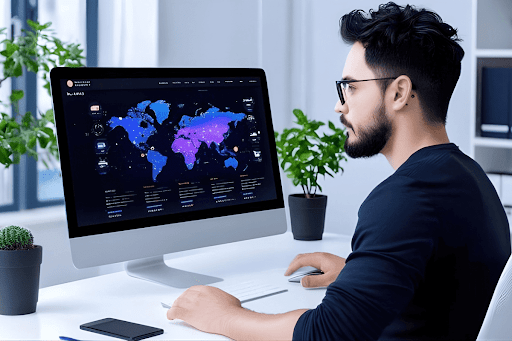

The COVID-19 pandemic has forced governments worldwide to adopt innovative measures to control the virus’s spread. Among these, coronavirus tracking apps have emerged as a critical tool. Designed to help monitor infections, notify individuals of potential exposure, and aid public health authorities in containing outbreaks, these apps have gained rapid popularity. However, alongside their potential benefits, concerns over privacy and data security have sparked significant debate.
How Coronavirus Tracking Apps Work
Coronavirus tracking apps operate through various mechanisms to detect exposure and monitor health status:
- Contact Tracing: The primary function of these apps is to notify users if they have been in close proximity to someone who tested positive for COVID-19. This can help individuals take preventive measures quickly.
- Location Tracking: Some apps use GPS data to track user movement and identify high-risk zones, while others rely on Bluetooth technology to detect nearby devices without recording precise locations.
- Health Reporting: Users can input symptoms, positive test results, or recovery status, providing health authorities with real-time data.
- Data Flow: Collected data is typically sent to central servers or stored in a decentralized manner, depending on app design, enabling health authorities to trace contacts efficiently.
Government Launches: States on a Spree
Since early 2020, numerous countries have rushed to launch official coronavirus tracking apps.
- Rapid Rollout: Governments introduced apps quickly to curb rising infections, often integrating them with national health services.
- Functionality Differences: Some apps focus solely on Bluetooth-based contact tracing, while others include GPS tracking, symptom reporting, and alerts for quarantine compliance.
- Adoption Challenges: Despite their potential, not all apps achieved widespread use due to technical issues, lack of awareness, or public distrust.
For instance, countries like Singapore, India, Germany, and the UK released official apps, each with unique features to tackle the virus efficiently.
Privacy Concerns
While coronavirus apps serve a vital role in pandemic management, privacy issues remain a pressing concern:
- Unfettered Access: Many apps require access to sensitive data such as location, contacts, and health information.
- Data Retention: Questions arise regarding how long user data is stored and whether it could be accessed for non-health purposes.
- Consent Issues: Users may unknowingly provide consent without understanding the extent of data collection.
- Government Surveillance: Critics warn about potential misuse, where apps could be repurposed for broader surveillance beyond public health objectives.
Technology & Security Measures
Different apps use varying technologies to balance effectiveness and privacy:
- Bluetooth-Based Apps: Detect proximity without revealing exact locations, offering better privacy.
- GPS-Based Apps: Track movement patterns and identify virus hotspots but can pose privacy risks.
- Hybrid Apps: Combine both methods for comprehensive tracing.
- Security Measures: Encryption, anonymization, and decentralized data storage are implemented in some apps to safeguard user information.
Effectiveness and Challenges
The success of tracking apps largely depends on public adoption and accuracy:
- Adoption Rate: Apps are only effective if a significant portion of the population uses them.
- False Alerts: Bluetooth and GPS inaccuracies may lead to false positives or negatives.
- Public Trust: Privacy concerns can reduce adoption, limiting the app’s effectiveness.
Some countries experienced high adoption rates leading to effective containment, while others struggled due to low trust and technical challenges.
Legal and Ethical Considerations
Apps must comply with local and international data protection laws, including:
- GDPR in Europe
- HIPAA in the United States
- Other regional privacy regulations
Ethically, governments must strike a balance between public health benefits and individual privacy rights, ensuring transparency, accountability, and informed consent for users.
8. Global Lessons and Future Implications
The deployment of tracking apps provides several lessons for governments and developers:
- Privacy-first design increases adoption and trust.
- Transparent communication about data collection and usage is essential.
- Digital tracking could be applied in future pandemics or health crises, but ethical and legal safeguards must be prioritized.
- Apps should ideally be voluntary rather than mandatory, ensuring public cooperation.
FAQs
Q1. What is a coronavirus tracking app?
A: It is a mobile application designed to monitor COVID-19 exposure, report symptoms, and assist health authorities in controlling the pandemic.
Q2. Are tracking apps safe for privacy?
A: Apps that use decentralized storage, anonymization, and Bluetooth-based detection provide better privacy protection.
Q3. Which countries have launched official tracking apps?
A: Countries like Singapore, India, Germany, and the UK have launched official apps with varying features.
Q4. How do Bluetooth-based and GPS-based apps differ?
A: Bluetooth apps detect nearby devices without tracking location, while GPS apps monitor movement patterns, potentially revealing precise locations.
Q5. Can governments misuse the data collected?
A: There is potential risk, which is why legal and ethical safeguards, transparency, and user consent are critical.
Conclusion
Coronavirus tracking apps are vital tools in the fight against COVID-19. They offer efficient contact tracing, real-time health monitoring, and virus containment. However, their success depends on public adoption, accuracy, and trust. Balancing public health needs with privacy rights is essential to ensure ethical and effective implementation. Moving forward, lessons learned from these apps will guide future digital health solutions while protecting individual privacy.